



Email marketing and customer retention automation have become core revenue drivers for modern ecommerce and digital businesses. While Klaviyo has long been a dominant player in this space, its pricing model, complexity, or feature set may not align with every company’s needs. As businesses mature, many begin searching for alternatives that offer better scalability, more transparent pricing, improved support, or specialized capabilities tailored to their industry.
TLDR: Klaviyo is powerful, but it isn’t the only serious option for email marketing and customer retention automation. Several platforms provide comparable or superior automation, segmentation, and omnichannel messaging at competitive price points. The right choice depends on your business size, technical resources, and growth goals. Below are five strong Klaviyo replacements, along with a comparison chart to help you evaluate them efficiently.
Below are five reliable Klaviyo alternatives that businesses consistently choose for performance, flexibility, and cost-effectiveness.
1. ActiveCampaign
Best for advanced automation across marketing and sales teams.
ActiveCampaign has positioned itself as a robust marketing automation suite with deep CRM integration. While Klaviyo focuses heavily on ecommerce, ActiveCampaign offers broader use cases, making it suitable for SaaS companies, service businesses, and B2B organizations.


Key strengths:
- Advanced automation builder with conditional logic and behavioral triggers.
- Integrated CRM for aligning marketing and sales workflows.
- Predictive sending powered by machine learning.
- Strong personalization tools beyond ecommerce events.
Compared to Klaviyo, ActiveCampaign often delivers more flexibility for non-ecommerce businesses and provides a deeper native CRM experience. Pricing is also competitive at lower subscriber counts, making it attractive for growing companies.
Potential drawback: Ecommerce integrations are strong but not as specialized as Klaviyo’s default Shopify-centric ecosystem.
2. Omnisend
Best for ecommerce brands seeking strong multichannel capabilities.
Omnisend is one of the closest direct competitors to Klaviyo in the ecommerce space. Designed primarily for online retailers, it combines email, SMS, web push notifications, and automation in a single platform.
Key strengths:
- Pre-built ecommerce automation workflows for cart abandonment, product recommendations, and post-purchase sequences.
- SMS and push notifications included in standard plans.
- User-friendly interface requiring minimal technical expertise.
- Transparent pricing structure based on contact count.
Businesses leaving Klaviyo often cite cost control as a primary reason. Omnisend’s pricing tends to scale more predictably, particularly when SMS is part of a retention strategy.
Potential drawback: While powerful, its customization depth may be slightly limited for highly advanced data-driven operations.
3. Drip
Best for growing ecommerce brands focused on revenue attribution.
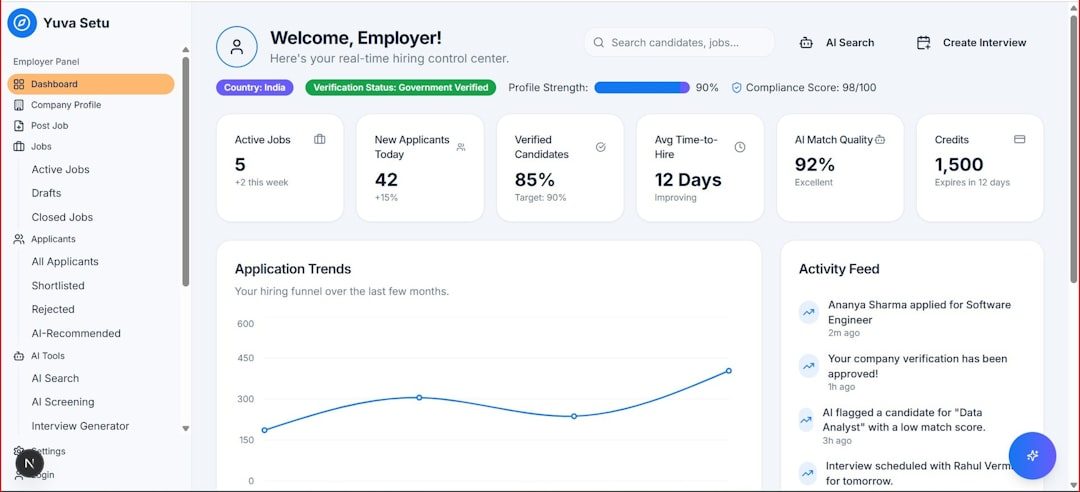
Drip is a purpose-built ecommerce CRM that blends email marketing with detailed customer data tracking. It is particularly appealing for direct-to-consumer brands that prioritize behavioral segmentation and revenue clarity.

Key strengths:
- Powerful segmentation based on customer purchase history and browsing behavior.
- Revenue attribution reporting tied directly to campaigns.
- High deliverability standards for email campaigns.
- Visual workflow builder designed for marketing teams.
Drip presents itself as a revenue-first alternative to Klaviyo. For businesses that want simplified dashboards centered around conversions and customer lifetime value, Drip offers a clear, focused experience.
Potential drawback: Unlike broader platforms, Drip is less suitable for non-ecommerce B2B environments.
4. HubSpot Marketing Hub
Best for companies seeking a unified marketing, sales, and service ecosystem.
HubSpot Marketing Hub is a comprehensive inbound marketing platform that integrates email automation with content management, CRM, customer service, and analytics. For organizations wanting complete operational alignment, HubSpot can replace not only Klaviyo but several other tools simultaneously.
Key strengths:
- All-in-one ecosystem including CRM, service desk, and CMS.
- Advanced lead nurturing workflows for B2B and B2C.
- Strong reporting and attribution modeling.
- Enterprise-grade scalability.
While Klaviyo excels in ecommerce-triggered messaging, HubSpot stands out as a full marketing infrastructure. For larger companies managing multiple touchpoints and teams, the integrated approach can increase efficiency and reporting clarity.
Potential drawback: HubSpot can become significantly more expensive at scale, especially compared to ecommerce-centric platforms.
5. MailerLite
Best for small to mid-sized businesses seeking simplicity and value.
MailerLite offers a streamlined, cost-effective alternative to Klaviyo for businesses that do not require heavy, enterprise-level automation. It focuses on essential functionality done well, without overwhelming complexity.

Key strengths:
- Intuitive drag-and-drop editor.
- Solid automation builder for onboarding and promotions.
- Competitive pricing with generous free tier.
- Landing page and form builder included.
For startups or lean marketing teams, MailerLite is often sufficient for core campaigns such as welcome sequences, newsletters, and retention emails. It avoids the learning curve and cost overhead of more complex platforms.
Potential drawback: Advanced data modeling and predictive personalization are limited compared to Klaviyo or enterprise tools.
Comparison Chart
| Platform | Best For | Automation Depth | Multichannel Support | Pricing Level | CRM Included |
|---|---|---|---|---|---|
| ActiveCampaign | B2B and SaaS businesses | Very Advanced | Email, SMS | Moderate | Yes |
| Omnisend | Ecommerce brands | Advanced | Email, SMS, Push | Moderate | Limited |
| Drip | DTC ecommerce | Advanced | Email, SMS integrations | Moderate to High | Ecommerce focused |
| HubSpot | Enterprise and scaling companies | Enterprise Grade | Email, SMS integrations, Ads | High | Yes |
| MailerLite | Startups and small businesses | Moderate | Email, basic integrations | Low | No |
How to Choose the Right Klaviyo Replacement
Selecting the right platform requires clarity about your goals and operational maturity. Consider the following evaluation criteria:
- Data complexity: Do you require advanced behavioral segmentation?
- Team size: Do you have dedicated CRM administrators?
- Budget forecast: How will pricing scale as your list grows?
- Channel mix: Are SMS, push, or ads critical?
- Integration needs: Does the platform map cleanly into your ecommerce stack?
If your strategy is deeply rooted in ecommerce lifecycle marketing, Omnisend or Drip may offer a seamless transition from Klaviyo. If you require cross-functional alignment across sales and marketing, ActiveCampaign or HubSpot are stronger long-term infrastructures. For lean teams, MailerLite provides efficiency without unnecessary overhead.
Final Thoughts
Klaviyo remains a capable and respected platform, but it is not the only solution for sophisticated email marketing and customer retention automation. Businesses evolve, and so do their requirements for pricing transparency, scalability, multichannel reach, and CRM functionality.
Each of the five platforms detailed above represents a credible alternative with proven reliability. The best choice depends not on feature volume, but on alignment with your business model, customer lifecycle, and internal resources.
Before migrating, conduct a structured audit of your current automations, revenue attribution models, and integration dependencies. A deliberate transition strategy will ensure continuity in deliverability and performance, preserving one of your most valuable assets: your customer relationships.