Wireless networks have become part of critical infrastructure, supporting everything from personal communication to logistics, health care, transportation, manufacturing, and emergency services. 5G, the fifth generation of mobile network technology, was designed to handle this expanding role by delivering faster speeds, lower delay, and greater capacity than earlier systems. It is not simply a faster version of 4G; it is a new network architecture built to support billions of connected devices and many different types of digital services.
TLDR: 5G works by using advanced radio frequencies, smarter antennas, dense network infrastructure, and cloud-based network management to move data more quickly and efficiently. It can provide higher speeds, lower latency, and better support for many connected devices at the same time. The real value of 5G is not only faster phone downloads, but also its ability to support technologies such as industrial automation, connected vehicles, remote health care, and large-scale Internet of Things systems.
What 5G Means
5G stands for fifth-generation mobile network. Each mobile generation has introduced important improvements. 2G made digital voice and text messaging common. 3G brought practical mobile internet access. 4G made video streaming, app-based services, and high-speed browsing widely available. 5G continues this progression, but with broader ambitions.
The goal of 5G is to create a more flexible wireless platform. Instead of serving mainly smartphones, it is built to support many categories of users and devices. These include consumer phones, factory sensors, autonomous machines, smart city systems, connected vehicles, medical devices, and private enterprise networks. To achieve this, 5G combines improvements in radio technology, software, network design, and data processing.
In everyday terms, users may notice 5G through faster downloads, smoother video calls, more responsive gaming, and better performance in crowded areas. However, the more important technical change is that 5G networks can be configured for different tasks. A video streaming service, an industrial robot, and a connected traffic signal do not need the same network behavior. 5G allows operators to manage these needs more precisely.
How 5G Uses Radio Spectrum
Like earlier wireless networks, 5G sends information using radio waves. These waves travel through the air between a device, such as a smartphone, and a nearby cell site. The device converts voice, video, or data into digital signals. The network then moves those signals through radio equipment, fiber connections, data centers, and the wider internet.
The major difference is that 5G can use a wider range of radio frequencies. These frequencies are commonly grouped into three categories:
- Low band spectrum: This travels long distances and penetrates buildings relatively well. It is useful for broad coverage, especially in rural or suburban areas, but it does not provide the highest speeds.
- Mid band spectrum: This offers a strong balance between coverage and capacity. In many countries, mid band spectrum is the main foundation of widespread 5G service because it provides noticeably faster speeds while still covering useful distances.
- High band spectrum: Often called millimeter wave, this can deliver extremely high speeds and large capacity, but it has limited range and is more easily blocked by walls, trees, weather, and even people.
This combination of spectrum types is one reason 5G performance varies from place to place. A user connected to low band 5G may see modest improvement over 4G, while someone near a high band 5G site may experience very fast downloads. The quality of the experience depends on spectrum, network density, signal strength, congestion, and device capability.

Why 5G Can Be Faster
5G can be faster because it uses more efficient radio methods and, in many cases, wider channels of spectrum. A useful comparison is a road system. If 4G is a road with fewer lanes, 5G can be a wider road with better traffic control. More data can move at once, and the network can organize that movement more efficiently.
One important technology is massive MIMO, which stands for multiple input, multiple output. This uses arrays of antennas to send and receive multiple data streams at the same time. Rather than broadcasting a signal broadly in every direction, advanced antenna systems can focus energy more precisely toward users.
This focus is called beamforming. With beamforming, the network directs a stronger signal toward a device instead of wasting energy across a large area. This improves speed, reliability, and capacity, particularly in dense city environments where many users are connected at once.
5G also uses improved coding and signal processing to transmit data more efficiently. The system is designed to adapt quickly to changing conditions, such as user movement, interference, or network congestion. When conditions are strong, the network can use more complex transmission techniques to move more data. When the signal weakens, it can adjust to maintain stability.
Latency: The Importance of Faster Response
Speed is often measured by how much data can be downloaded per second, but another important measure is latency. Latency is the time it takes for data to travel from one point to another and receive a response. In practical terms, it is the delay between an action and the network’s reaction.
Lower latency matters for services that require quick response. Video calls feel more natural when delay is low. Online games become more responsive. Industrial machines can be monitored and controlled more precisely. Connected vehicles may eventually use low-latency communication to exchange safety information with roads, traffic systems, and nearby vehicles.
5G was designed to reduce latency, although actual results depend on how the network is built. A phone connected to a public 5G network may not always experience the theoretical minimum delay. However, in carefully designed environments, such as private industrial networks, 5G can support very low-latency applications.
Network Slicing and Flexible Design
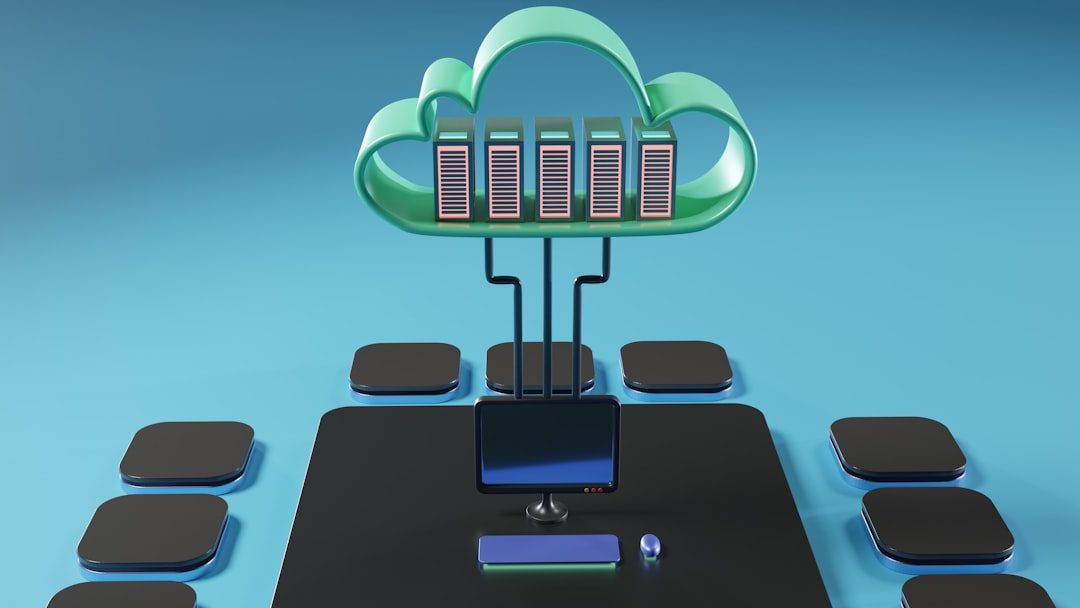
One of the most significant changes in 5G is the move toward a more software-driven network. Traditional mobile networks relied heavily on specialized hardware. 5G still uses physical equipment, but many network functions can be managed through software running in cloud environments.
This makes possible a feature known as network slicing. A network slice is a virtual section of the network configured for a particular type of service. For example, one slice may be optimized for high-speed consumer video, another for low-latency industrial control, and another for large numbers of low-power sensors.
Network slicing allows operators to provide different performance characteristics over the same physical infrastructure. This does not mean every user automatically gets a custom network, but it gives service providers and enterprises a more precise way to match network behavior with real requirements.
For industries, this flexibility is important. A factory may care more about reliability and predictable response than maximum download speed. A smart meter system may need long battery life and coverage, but only small data transfers. 5G can be designed to serve these different needs more effectively than previous generations.
Small Cells and Dense Infrastructure
To deliver high performance, especially in cities, 5G often requires a denser network of cell sites. These may include traditional towers, rooftop antennas, and small cells mounted on streetlights, utility poles, buildings, or transit stations.
Small cells are especially important for high band spectrum because millimeter wave signals do not travel far. Instead of relying on a few large towers, operators may deploy many smaller access points closer to users. This increases capacity and helps maintain strong signal quality.
Network density also helps in crowded locations such as stadiums, airports, business districts, and shopping areas. When many people use data at the same time, a limited number of cell sites can become congested. More access points allow the network to divide traffic more effectively and maintain better performance.
However, dense deployment also brings challenges. Operators need suitable locations, power, fiber connections, permits, and ongoing maintenance. This is one reason 5G expansion can be uneven. Urban business areas may receive advanced 5G coverage before rural regions, where the economics and geography are different.
The Role of Edge Computing
5G is often discussed alongside edge computing. In traditional internet architecture, user data may travel to distant data centers for processing. Edge computing moves some of that processing closer to the user, often within regional facilities or near the mobile network itself.
This can reduce delay and improve performance for applications that need fast responses. For example, a factory using computer vision to inspect products may not want video data traveling to a distant cloud before results are returned. Processing closer to the factory can save time and reduce network load.
Edge computing is not required for every 5G use case. Email, web browsing, and ordinary video streaming often work well through conventional cloud systems. But for advanced applications such as augmented reality, robotics, and real-time analytics, combining 5G with edge computing can be valuable.
5G and the Internet of Things
The Internet of Things, or IoT, refers to networks of connected devices that collect, send, and sometimes act on data. These devices may include environmental sensors, delivery trackers, security systems, smart appliances, utility meters, medical monitors, and industrial equipment.
5G supports IoT in several ways. It can handle very large numbers of devices in a defined area. It can also support low-power devices designed to operate for years on batteries. In industrial environments, 5G can provide reliable wireless connectivity for machines and sensors that might otherwise require complex cabling.
For businesses and public agencies, this creates opportunities to monitor assets, improve maintenance, reduce waste, and respond faster to changing conditions. A city could use connected sensors to manage traffic flow or monitor air quality. A logistics company could track goods across warehouses and transport routes. A hospital could connect medical equipment more reliably within controlled environments.

Security and Reliability Considerations
Because 5G may support critical services, security is a serious concern. 5G includes stronger security features than earlier mobile generations, including improved authentication and better protection for subscriber information. Software-based design can also allow faster updates and more flexible security management.
At the same time, 5G creates a larger and more complex attack surface. More connected devices, more software components, more vendors, and more distributed infrastructure can increase risk if not managed carefully. Weak IoT devices, poor configuration, and insecure applications can undermine the benefits of the network itself.
Trustworthy 5G deployment requires layered security. This includes secure device design, encrypted communications, strong identity management, network monitoring, supply chain review, and regular software updates. For critical sectors, resilience is as important as speed. Networks must be able to continue operating, recover from failures, and resist disruption.
Common Misunderstandings About 5G
One common misunderstanding is that all 5G is the same. In reality, performance varies widely depending on spectrum, infrastructure, device support, and local network design. A 5G icon on a phone does not guarantee the highest possible speed.
Another misconception is that 5G immediately replaces 4G. In practice, 4G and 5G often operate together. Many networks use 4G infrastructure for certain control functions while adding 5G radio access. Over time, more networks are moving toward standalone 5G, where the core network is fully 5G-based.
It is also important to understand that 5G is not useful only for consumers. Faster smartphone service is the most visible benefit, but many of the long-term effects may appear in business operations, public infrastructure, transportation, health care, and manufacturing.
What Comes Next
5G deployment is still developing. Operators continue to add spectrum, expand coverage, upgrade core networks, and improve reliability. Device manufacturers are also refining modems and antennas, which can improve battery life and performance. As standalone 5G becomes more common, the network’s advanced features should become more widely available.
Future improvements will likely focus on better indoor coverage, more private 5G networks, stronger integration with edge computing, and expanded industrial use. Researchers and standards organizations are already studying 6G, but 5G will remain important for many years because network generations take time to deploy, mature, and produce their full economic impact.
Conclusion
5G is best understood as a modern wireless platform rather than a simple speed upgrade. It works through a combination of broader spectrum use, advanced antennas, beamforming, dense infrastructure, cloud-based network functions, and more flexible management. These elements allow 5G to deliver faster data speeds, lower latency, and better support for large numbers of connected devices.
For consumers, the benefits may include smoother streaming, faster downloads, and improved performance in busy places. For businesses and public systems, the larger promise is reliable wireless connectivity tailored to specific operational needs. As deployment continues, 5G is likely to become a foundation for more connected, automated, and data-driven services across the economy.