The Kindle Scribe represents Amazon’s most ambitious attempt to merge traditional e-reading with digital handwriting. Since its release, many prospective buyers have asked a central question: does the Kindle Scribe actually have AI features? The answer is nuanced. While it includes intelligent software capabilities powered by machine learning, it is not an AI-driven writing assistant in the same sense as tools like ChatGPT or advanced note-taking apps with generative AI.
TLDR: The Kindle Scribe does include AI-powered features, particularly in handwriting recognition and note summarization, but it is not a fully AI-driven productivity device. Its artificial intelligence functions focus mainly on converting handwritten notes into text and refining written content. It does not offer generative AI writing, conversational AI, or predictive content generation. Overall, its AI is practical, targeted, and integrated quietly into specific workflows.
Understanding What “AI Features” Really Means
Before evaluating the Kindle Scribe, it is important to clarify what qualifies as an AI feature. Today, the term artificial intelligence is often used broadly to describe a range of capabilities, including:
- Handwriting recognition
- Text-to-speech processing
- Content summarization
- Language translation
- Predictive text generation
- Conversational assistants
Some of these rely on relatively narrow machine-learning models, while others are powered by advanced generative AI systems. The Kindle Scribe focuses only on specific categories, particularly note processing and handwriting conversion.
Core AI Feature: Handwriting to Text Conversion
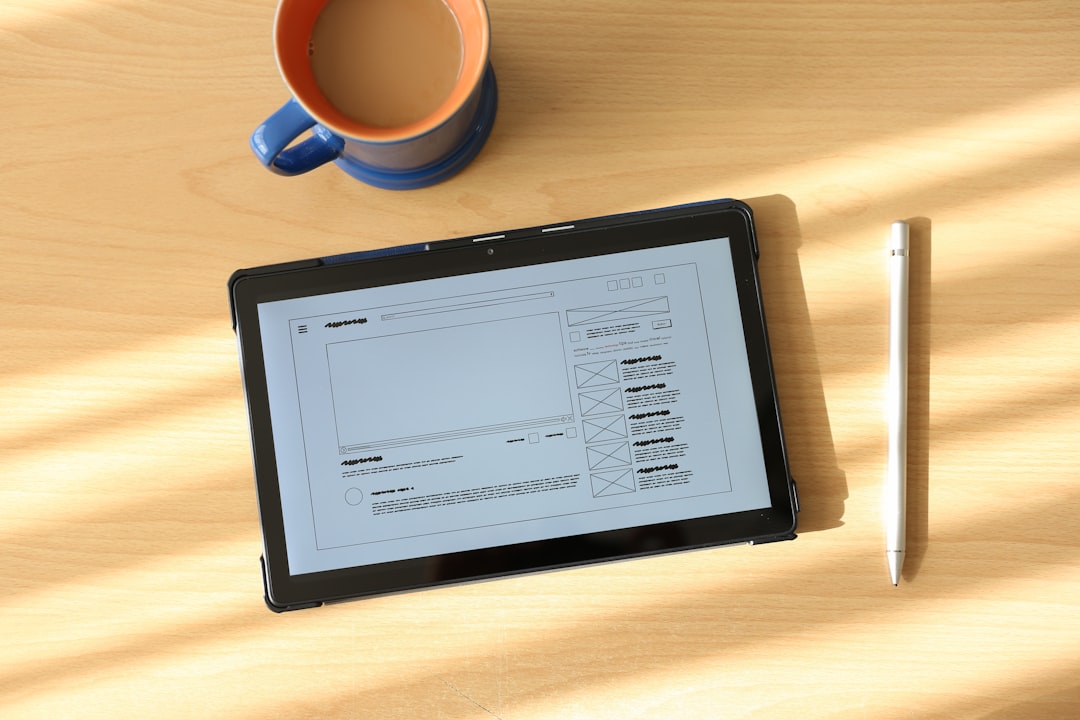
The most significant AI-powered capability in the Kindle Scribe is its ability to convert handwritten notes into typed text. This function relies on machine learning models trained to recognize handwriting patterns across different users.
Here’s how it works:
- You write notes using the included stylus on the e-ink display.
- The system captures stroke data and pattern input.
- The handwriting recognition engine processes the content.
- Your handwriting is converted into digital text that can be shared via email.
This feature is particularly useful for professionals, students, and researchers who want the tactile experience of writing by hand but need the flexibility of digital text for sharing or archiving.
It is important to note that this is not new technology in the broader market. Handwriting recognition has existed for years. However, Amazon refined it for the Scribe’s low-latency e-ink environment, making it feel fluid and reliable.
AI-Powered Notebook Summaries
Amazon introduced AI enhancements to the Kindle Scribe through software updates after the device’s initial release. One of the most notable updates added the ability to generate summaries of handwritten notes.
This functionality works by analyzing the converted text and producing a concise overview of key ideas. It is particularly effective when notes are structured clearly or written in paragraph form.
The summarization tool can:
- Create shorter versions of meeting notes
- Highlight main points from lectures
- Organize brainstorming sessions into readable summaries
While this resembles generative AI behavior, it operates in a limited scope. It does not create new arguments or expand ideas. Rather, it condenses existing content.
Refinement Tools for Better Writing
Another intelligent addition is the Refine Writing feature. This tool allows you to rewrite handwritten content into neater, more polished text once it has been converted.
For example, it can:
- Adjust rough bullet points into full sentences
- Correct obvious grammar mistakes
- Standardize tone
Again, this is a controlled AI function. It operates strictly on the content you provide. It does not invent new information or perform open-ended writing tasks.
What the Kindle Scribe Does Not Offer

To evaluate whether the Scribe has AI features fairly, we must also examine what it does not include.
The device currently lacks:
- Conversational AI assistants
- Open-ended content generation
- Real-time translation tools
- Voice-activated AI commands
- Predictive writing suggestions
In contrast to tablets like the iPad with AI-powered third-party apps, or note-taking platforms such as Notion AI, the Kindle Scribe remains intentionally focused. Amazon designed it primarily as a distraction-free reading and writing device.
This restrained implementation may actually appeal to users who prefer simplicity over feature overload.
Is the AI Processing Done on the Device or in the Cloud?
Amazon has not publicly disclosed every technical detail about how AI tasks are processed. However, it is widely understood that more advanced features—such as summarization and writing refinement—rely at least partially on cloud-based processing.
This means:
- Your handwritten notes may be securely transmitted to Amazon servers.
- AI models analyze and process the content remotely.
- The results are then delivered back to your device.
For privacy-conscious users, this is an important consideration. While Amazon maintains encryption and security standards, cloud-based AI processing inherently involves data transmission outside the device itself.
How the Kindle Scribe Compares to Full AI Writing Devices
Devices and platforms marketed as AI-powered writing tools—such as tablets running AI-enhanced apps—generally provide:
- Idea generation
- Automated drafting
- Context-aware suggestions
- Interactive editing dialogue
The Kindle Scribe does not compete in this category. Instead, it integrates AI in a supportive rather than creative capacity. Its intelligence enhances organization and clarity rather than originality.
This distinction is critical. If you expect the Kindle Scribe to function like an AI co-author, you will be disappointed. If you want cleaner notes and efficient summarization, it performs competently.
Why Amazon Took a Minimalist AI Approach
Amazon’s product strategy for Kindle devices has long prioritized focus and simplicity. The core Kindle identity centers around:
- Distraction-free reading
- Long battery life
- Paper-like display technology
- Minimal interference from notifications
Adding robust generative AI systems could compromise that identity. Features such as constant suggestions, pop-ups, or chat interfaces might undermine the calm reading experience that Kindle users value.
Instead, Amazon appears to be incrementally layering AI in ways that feel invisible and supportive rather than intrusive.
Who Benefits Most from the Kindle Scribe’s AI?
The following groups are likely to gain the most practical value from its current AI tools:
Students
They can summarize lecture notes quickly and convert written content into shareable documents.
Professionals
Meeting notes can be refined and distributed efficiently without retyping.
Researchers and Academics
Handwritten annotations can be digitized for easier search and collaboration.
For creative writers seeking brainstorming assistance or for users wanting conversational AI, the Scribe will feel limited.
Will Future Updates Expand AI Capabilities?
Amazon has already demonstrated a willingness to enhance the Kindle Scribe through firmware updates. Since AI functionality is largely software-dependent, the platform has room to grow.
Future updates could potentially introduce:
- More advanced summarization algorithms
- Improved handwriting accuracy
- Light predictive text features
- Enhanced organizational automation
However, it is unlikely that Amazon will transform the Kindle Scribe into a fully generative AI device, given its market positioning.
Final Assessment: Does Kindle Scribe Have AI Features?
Yes, the Kindle Scribe does have AI features—but they are focused, controlled, and purpose-built. The device uses artificial intelligence primarily for handwriting recognition, text summarization, and writing refinement. These features enhance usability without redefining the device as a creative AI platform.
For users seeking a hybrid between paper notebooks and digital organization tools, the Scribe’s AI capabilities are practical and meaningful. For those expecting a sophisticated AI assistant capable of writing essays, generating ideas, or holding conversations, the device does not meet that threshold.
In short, the Kindle Scribe integrates selective intelligence rather than transformative AI. Its strength lies in supporting productivity quietly, without compromising its core mission as a distraction-free reading and writing device.