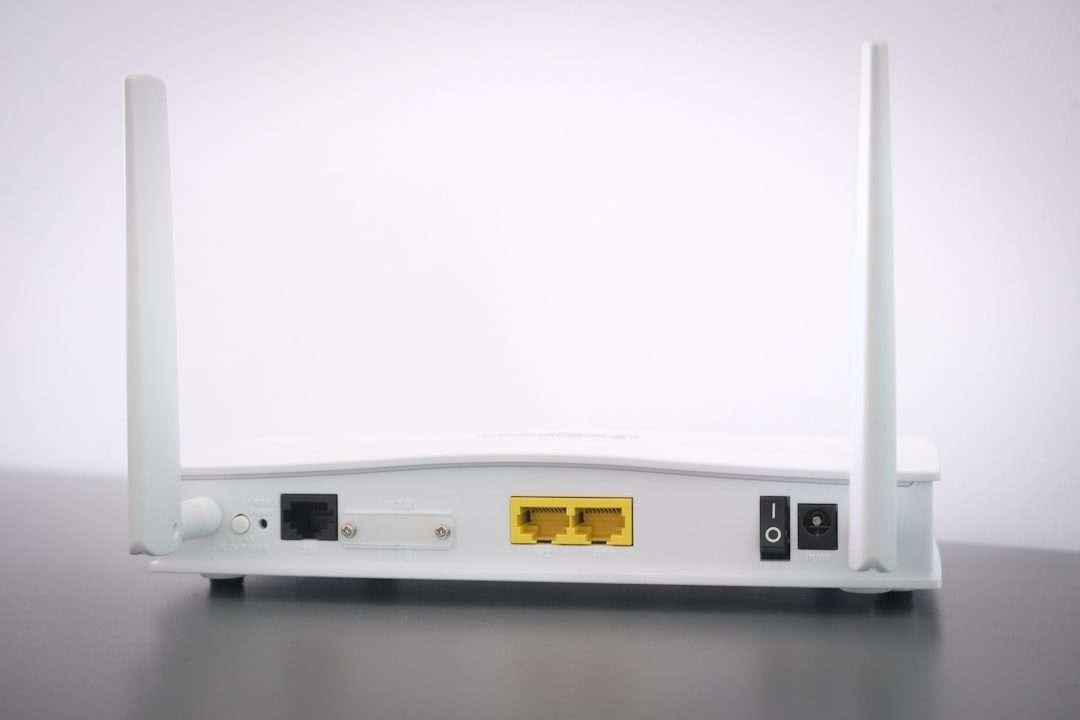
In 2026, the difference between WiFi 6 and WiFi 6E is no longer just a technical detail for networking enthusiasts. It matters for households with many connected devices, small businesses relying on stable video calls, gamers who care about latency, and anyone buying a new router or laptop. Both standards are fast, modern, and widely supported, but they do not use the airwaves in exactly the same way.
TLDR: WiFi 6 and WiFi 6E use the same core technology, but WiFi 6E adds access to the 6 GHz band, which can provide cleaner, faster, and lower-latency connections at shorter range. WiFi 6 works on the established 2.4 GHz and 5 GHz bands, making it more compatible and often better for coverage. In 2026, WiFi 6E is still a strong upgrade for crowded environments, but WiFi 6 remains practical and reliable for many homes and offices.
Understanding the Basics
WiFi 6, officially known as 802.11ax, was designed to improve wireless performance in crowded environments. Unlike earlier generations that mainly focused on peak speed, WiFi 6 improved how routers handle many devices at once. It introduced better traffic management, higher efficiency, improved battery performance for connected devices, and stronger performance in dense areas such as apartment buildings, offices, schools, and public venues.
WiFi 6E is not a completely different generation of WiFi. The “E” stands for Extended. It uses the same underlying WiFi 6 technology but extends it into the 6 GHz frequency band. That additional spectrum is the key difference. In simple terms, WiFi 6E gives compatible devices access to a newer, less congested wireless highway.
This distinction is important because many people assume WiFi 6E must always be dramatically faster than WiFi 6. In reality, the answer depends on the device, router, distance, wall materials, network congestion, and internet service speed. WiFi 6E can be better, but it is not automatically better in every room or every situation.

The Main Difference: The 6 GHz Band
The clearest difference is frequency support:
- WiFi 6 operates on 2.4 GHz and 5 GHz.
- WiFi 6E operates on 2.4 GHz, 5 GHz, and 6 GHz, assuming the router and device both support it.
The 2.4 GHz band travels farther and penetrates walls better, but it is crowded and slower. It is shared by many older WiFi devices, Bluetooth equipment, smart home products, baby monitors, and other household electronics. The 5 GHz band is faster and less congested than 2.4 GHz, but it has shorter range. The 6 GHz band used by WiFi 6E offers even more available channels and less interference, but its range is usually shorter than 5 GHz and noticeably shorter than 2.4 GHz.
In practical terms, 6 GHz is excellent when you are close to the router or a mesh node. It is especially useful in the same room or nearby rooms. However, if the signal must pass through several walls, floors, or dense building materials, WiFi 6 on 5 GHz or even 2.4 GHz may provide a more stable connection.
Speed: Is WiFi 6E Faster Than WiFi 6?
WiFi 6E can be faster than WiFi 6, but not because its core technology is fundamentally different. The advantage comes from the extra spectrum available in the 6 GHz band. More spectrum means wider channels and less interference from neighboring networks. In a crowded apartment building, that can make a real difference.
For example, a WiFi 6 router using 5 GHz may have to compete with dozens of nearby networks. A WiFi 6E router using 6 GHz may operate in a cleaner space, allowing compatible phones, laptops, and tablets to achieve higher real-world speeds. This is especially helpful for local tasks such as transferring large files, streaming high-bitrate media from a local server, or using wireless VR.
However, your internet connection can still be the bottleneck. If your broadband plan is 300 Mbps, a WiFi 6E router capable of much higher wireless speeds will not magically make your internet faster than the service you pay for. The benefit is more about capacity, stability, and reduced interference than headline speed alone.
Latency and Responsiveness
Latency is the delay between sending and receiving data. For browsing and email, a tiny delay is rarely noticeable. For gaming, video conferencing, cloud computing, virtual reality, and remote work, lower latency can make the experience feel smoother and more reliable.
WiFi 6 already improved latency compared with older WiFi standards by using technologies such as OFDMA and MU MIMO. These help the router communicate with multiple devices more efficiently. WiFi 6E adds another advantage by moving compatible devices onto the less crowded 6 GHz band.
In 2026, this is one of the strongest reasons to choose WiFi 6E. If your home has many connected devices, or if your neighbors’ networks are crowding the 5 GHz band, 6 GHz can provide a cleaner connection with fewer delays. That said, the improvement is most noticeable when the device has a strong 6 GHz signal.
Range and Coverage
Range is where WiFi 6 often has the advantage. Because WiFi 6 uses 2.4 GHz and 5 GHz, it can cover larger areas more easily. The 2.4 GHz band is still valuable for smart home devices, outdoor cameras, garage equipment, and rooms far from the router. It may not be the fastest option, but it is dependable over distance.
WiFi 6E’s 6 GHz band is more limited in range. Higher-frequency signals generally struggle more with walls, ceilings, furniture, and other obstacles. In a small apartment or open-plan space, this may not matter much. In a larger home, a single WiFi 6E router may not deliver strong 6 GHz coverage everywhere.
This is why many serious WiFi 6E installations use mesh systems. A mesh system places multiple access points around the home or office, reducing the distance between devices and the nearest node. With good placement, WiFi 6E mesh can be excellent. Without good placement, users may find that their devices frequently fall back to 5 GHz.
Device Compatibility in 2026
By 2026, WiFi 6 support is common across smartphones, laptops, tablets, routers, and business equipment. Many midrange and budget devices support WiFi 6, and it remains a safe compatibility choice. If a router supports WiFi 6, most modern devices can benefit from it.
WiFi 6E support is also much more common than it was at launch, but it is still not universal. Many premium phones, high-end laptops, gaming devices, and business machines support 6E. Some lower-cost devices do not. To use the 6 GHz band, both the router and the client device must support WiFi 6E. If your laptop only supports WiFi 6, it will not connect over 6 GHz even if you own a WiFi 6E router.
There is also a regional factor. The availability of 6 GHz spectrum depends on local regulations. Many countries have approved WiFi 6E, but the exact amount of available spectrum can vary. For most consumers, this is handled automatically by certified devices, but businesses and network planners should still check local rules.
Security Differences
Security is another area worth noting. WiFi 6E generally requires WPA3 security for 6 GHz operation. WPA3 is stronger than older WPA2 security and provides better protection against certain password-guessing attacks. This gives WiFi 6E networks a modern security baseline.
WiFi 6 can also use WPA3, and many WiFi 6 routers support it. However, because WiFi 6 must remain compatible with older devices, many networks still run in mixed WPA2/WPA3 mode. For best security in 2026, users should enable WPA3 where possible, use strong passwords, keep router firmware updated, and disable outdated security modes.
WiFi 6 vs WiFi 6E for Home Users
For a typical home, the best choice depends on layout, device mix, and expectations. WiFi 6 is usually enough if you want reliable coverage, have many older or midrange devices, and do not live in a heavily congested wireless environment. It is also often more affordable.
WiFi 6E makes more sense if you have newer devices, gigabit or multi-gigabit internet, many competing nearby networks, or specific needs such as gaming, high-quality video calls, large downloads, media production, or wireless VR. It is especially helpful in apartments and dense neighborhoods where the 5 GHz band is crowded.
For larger homes, do not judge only by the standard. A well-designed WiFi 6 mesh system may outperform a poorly placed WiFi 6E router. Placement, backhaul quality, router processing power, and antenna design all matter.
WiFi 6 vs WiFi 6E for Businesses
For businesses, WiFi 6E can be a valuable upgrade when many employees, guests, and devices compete for wireless capacity. Offices with video meetings, cloud applications, shared workspaces, and high device density can benefit from the additional 6 GHz channels. The cleaner spectrum allows network administrators to design more efficient wireless layouts.
However, businesses should consider lifecycle planning. If a company still uses many older laptops and barcode scanners that do not support 6E, the immediate benefit may be limited. A phased upgrade may be more sensible: deploy WiFi 6E access points now while replacing client devices over time.
What About WiFi 7?
By 2026, WiFi 7 is also part of the conversation. WiFi 7 builds on the 6 GHz band and adds features designed for even higher speeds, lower latency, and better multi-link performance. This does not make WiFi 6 or WiFi 6E obsolete. Many households and businesses will continue using them effectively for years.
If you are buying premium networking equipment in 2026, WiFi 7 may be worth considering. But if the decision is specifically between WiFi 6 and WiFi 6E, the practical question remains the same: do you need the 6 GHz band, and do your devices support it?
Which One Should You Choose in 2026?
- Choose WiFi 6 if you want strong compatibility, good coverage, lower cost, and reliable performance for everyday use.
- Choose WiFi 6E if you have compatible devices and want cleaner spectrum, lower congestion, and better performance near the router or mesh nodes.
- Choose a mesh system if coverage is your main problem, regardless of whether it is WiFi 6 or WiFi 6E.
- Check your internet speed before overspending; a faster router cannot exceed the limits of your broadband plan.
The serious takeaway is that WiFi 6E is best understood as an enhanced version of WiFi 6, not a replacement in every scenario. Its 6 GHz band is powerful, clean, and valuable, but it works best at shorter distances and with modern devices. WiFi 6 remains a mature, dependable standard with excellent compatibility and coverage. In 2026, the right choice is not simply the newer label; it is the standard that best matches your space, devices, and performance needs.